16 September 2026
Why Being 'Fine' Might Be the Problem: Emotional Suppression and Its Cost
Keeping calm and carrying on is quietly praised as strength — yet research links habitual emotional suppression to greater distress, not resilience. Here's the surprising science behind 'I'm fine'.
Reading time: about 5 minutes
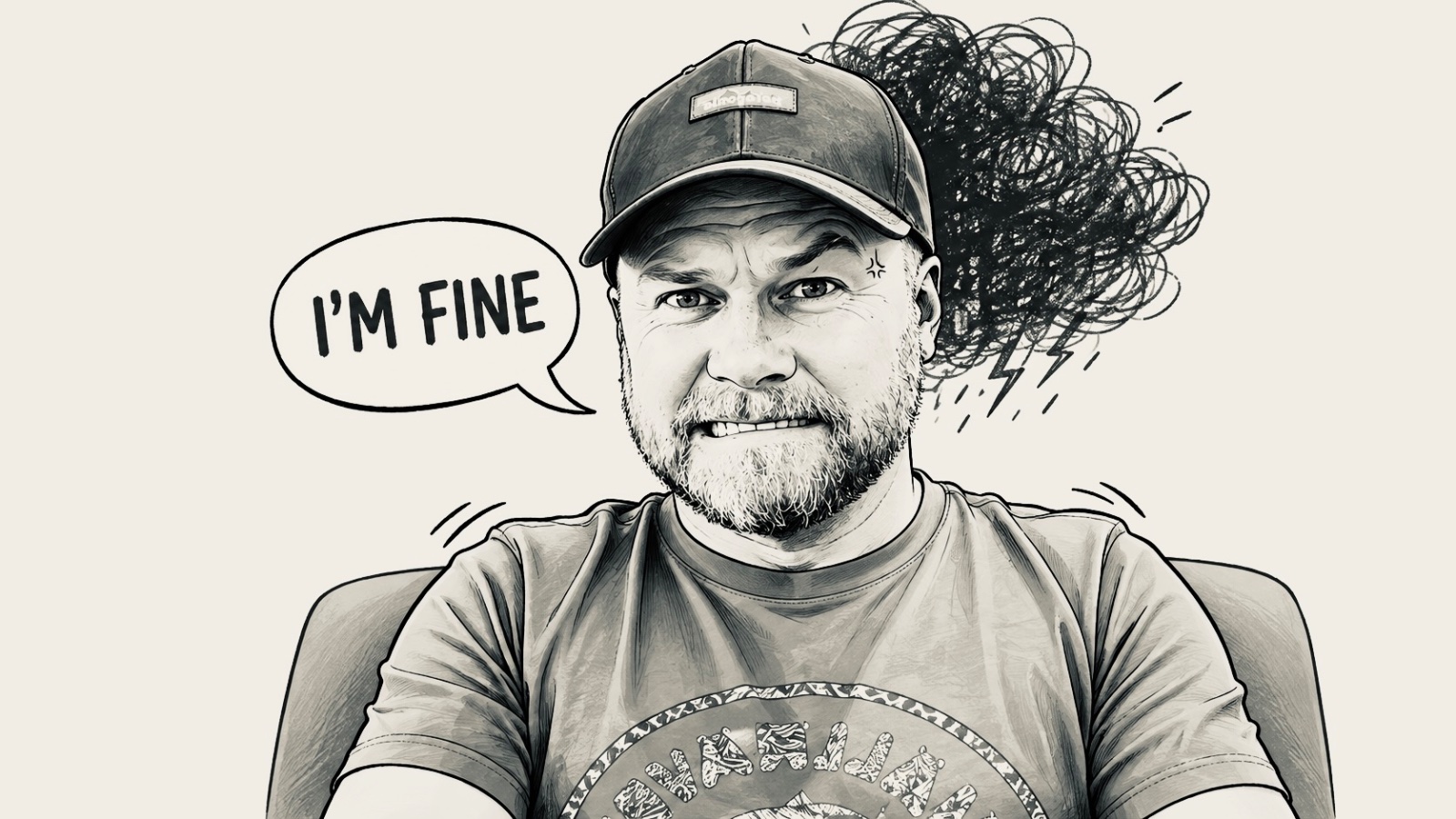
"I'm fine."
Two words that do an enormous amount of work in life. They end awkward conversations, reassure worried colleagues, and let us get on with the day. But a growing body of research suggests that the habit behind those words — quietly suppressing feelings and keeping our faces neutral — may carry a cost we rarely name. Far from being a reliable sign of strength, chronic emotional suppression is more often linked to greater psychological distress, not less.
This matters because much everyday advice pulls in the opposite direction. "Stay positive." "Don't dwell on it." "Just cope." Yet resilience and suppression are not the same thing, and confusing the two can leave people stuck or without agency.
What Psychologists Actually Mean by "Suppression"
In emotion science, expressive suppression is a specific strategy: inhibiting the outward signs of a feeling while the feeling itself continues beneath the surface. It sits within models of emotion regulation, which distinguish strategies applied after an emotion has fully formed (like suppression) from those applied earlier, such as reappraising a situation before it escalates.
The distinction matters because suppression is a response-focused strategy — you are managing the display, not the emotion. Classic clinical work by Gross and Levenson showed that suppressing feelings does not switch them off; the internal experience and physiological arousal persist, and sometimes intensify, even as outward expression flattens. In other words, looking calm is not the same as being calm.
The "Just Cope" Narrative — and Why It's Incomplete
There is a genuine debate here, and it deserves honesty rather than a tidy slogan. Some clinicians and commentators have argued that a culture of compulsory emotional openness can be unhelpful — that relentlessly encouraging disclosure risks turning ordinary difficulties into problems requiring treatment, and that a degree of emotional restraint can be a healthy response to adversity.
That is a fair caution.
But it is not an argument for bottling things up forever.
The same discussion notes provide evidence that habitual emotional suppression is linked to poorer outcomes — for example, studies linking anti-emotional, "rational" coping styles to worse functional recovery and greater mood disturbance among people who suppressed their emotions before major medical events.
Restraint in the moment is not the problem; a permanent policy of "I'm fine" is.
What Recent Research Suggests
Across multiple meta-analyses, habitual expressive suppression is linked to lower well-being and poorer mental health, and is widely characterised as a relatively costly emotion-regulation strategy. In studies using the standard Emotion Regulation Questionnaire, greater reliance on suppression is repeatedly associated with increased symptoms of depression, anxiety and stress. Suppression also reinforces unhelpful mental habits: recent network analyses find it closely tied to rumination — the brooding, "controlling emotions by not expressing them" loop that keeps distress circulating rather than resolving.
Here is the nuance that most self-help content overlooks.
A large 2023 investigation across Taiwan and the United States (involving over 1,300 people) found that what you suppress matters as much as whether you suppress. Consistently suppressing positive emotions predicted lower well-being, whereas suppressing negative emotions was only weakly related to well-being.
The quiet damage of being permanently "fine" may sometimes lie less in hiding sadness or frustration, and more in muting the warmth, delight and enthusiasm that build our connections with others.
When we clamp down on the good feelings too — the smile we swallow, the excitement we play cool — we lose the very signals that draw people closer.
Suppression vs. Regulation: A Practical Distinction
The healthier alternatives are not about broadcasting every feeling.
They include reappraisal (rethinking what a situation means) and acceptance (letting a feeling be present without fighting or suppressing it) — both linked to fewer anxiety and depressive symptoms than suppression. Acceptance, in particular, echoes a therapeutic insight: naming and allowing an emotion tends to loosen its grip, whereas hiding it tends to preserve it.
Why This Matters in Therapy
In relational and integrative therapy, "I'm fine" is often the start of the work, not the end. The therapy room is one of the few places where you don't have to manage your expression for anyone else's comfort. That freedom is not indulgence — it is precisely what suppression makes so hard to find elsewhere, and it can interrupt the rumination-and-restraint cycle that keeps distress alive.
Being "fine" is sometimes exactly right — a deliberate choice to remain composed in a moment that calls for it.
The problem arises when "fine" stops being a choice and becomes the only setting you have. Noticing the difference is where change usually begins.